Healthcare execution infrastructure
Finish structured healthcare workflows inside legacy systems.
OpenAdapt fits RCM vendors, healthcare BPOs, automation teams, and vertical-software companies that already have structured input and business logic but still need a repeated write through a GUI. Demonstrate that last-mile step and OpenAdapt compiles it into a locally executable program with explicit identity, effect, policy, and halt semantics.
Keep document processing, eligibility, routing, and business rules in the systems that already do them well. Use supported APIs wherever possible, then give OpenAdapt the final UI-only write and verify its effect against an independent source of truth.
Process
How it works
A demonstrated task becomes a reviewable program, not a prompt that a model reinterprets on every run.
- 1.0
Record
Demonstrate one bounded instance. OpenAdapt captures the screen, input, and available structural evidence needed to compile it.
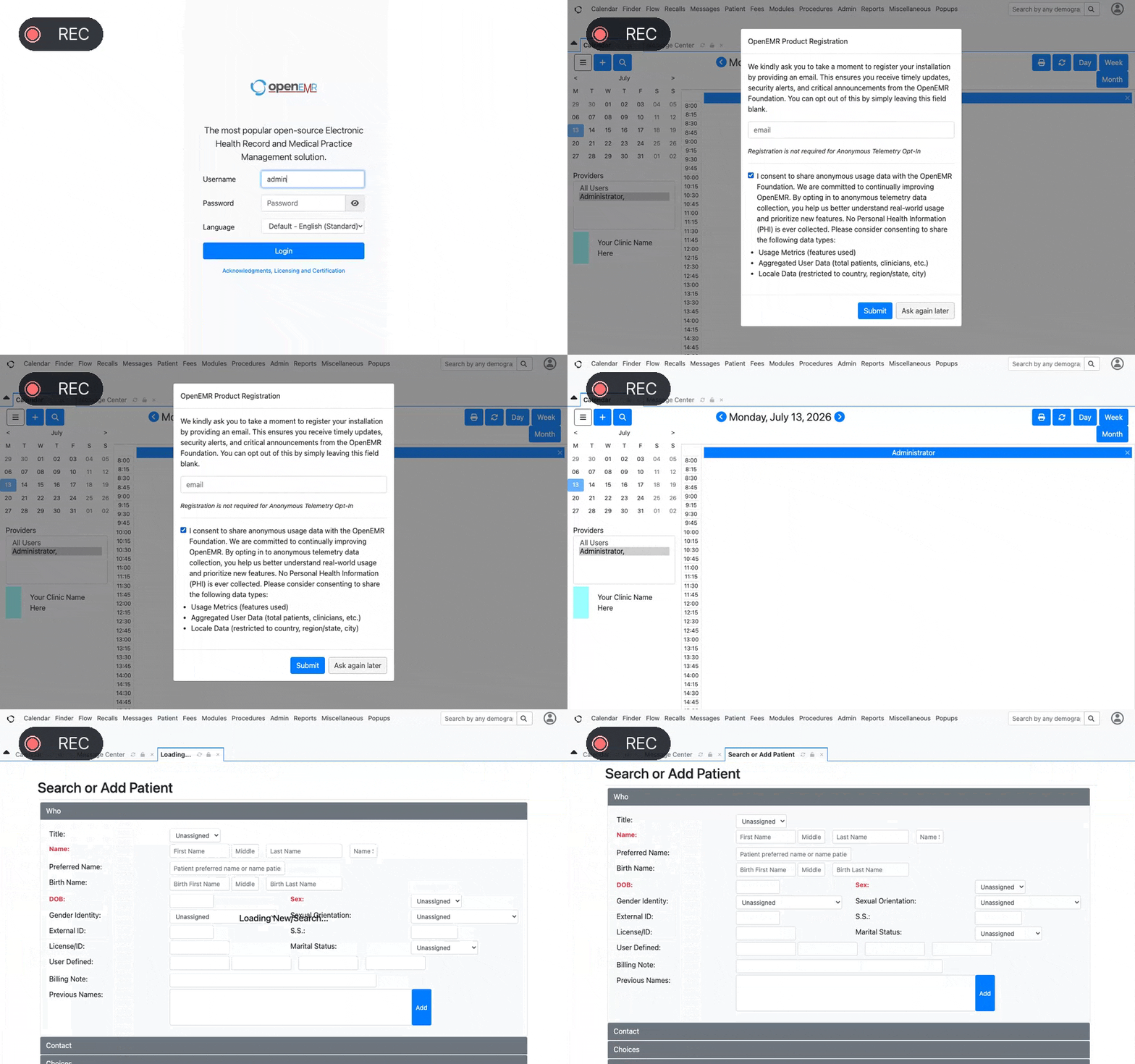
Record — real footage · driving a live OpenEMR instanceBrowser execution · selected application footage - 2.0
Compile
Your recording becomes a script you can read, edit, and reuse.
workflow.jsoninspectable- workflow
- openemr-browser-reference
- parameters
- workflow-defined inputs
- target
- bounded OpenEMR browser task
- effect
- deployment-specific oracle required
compile — OpenEMR demonstrationSelected-app footage with an animated view of the inspectable workflow OpenAdapt produces.Browser execution · selected application footage - 3.0
Replay
Healthy runs execute the compiled steps locally without a model call.
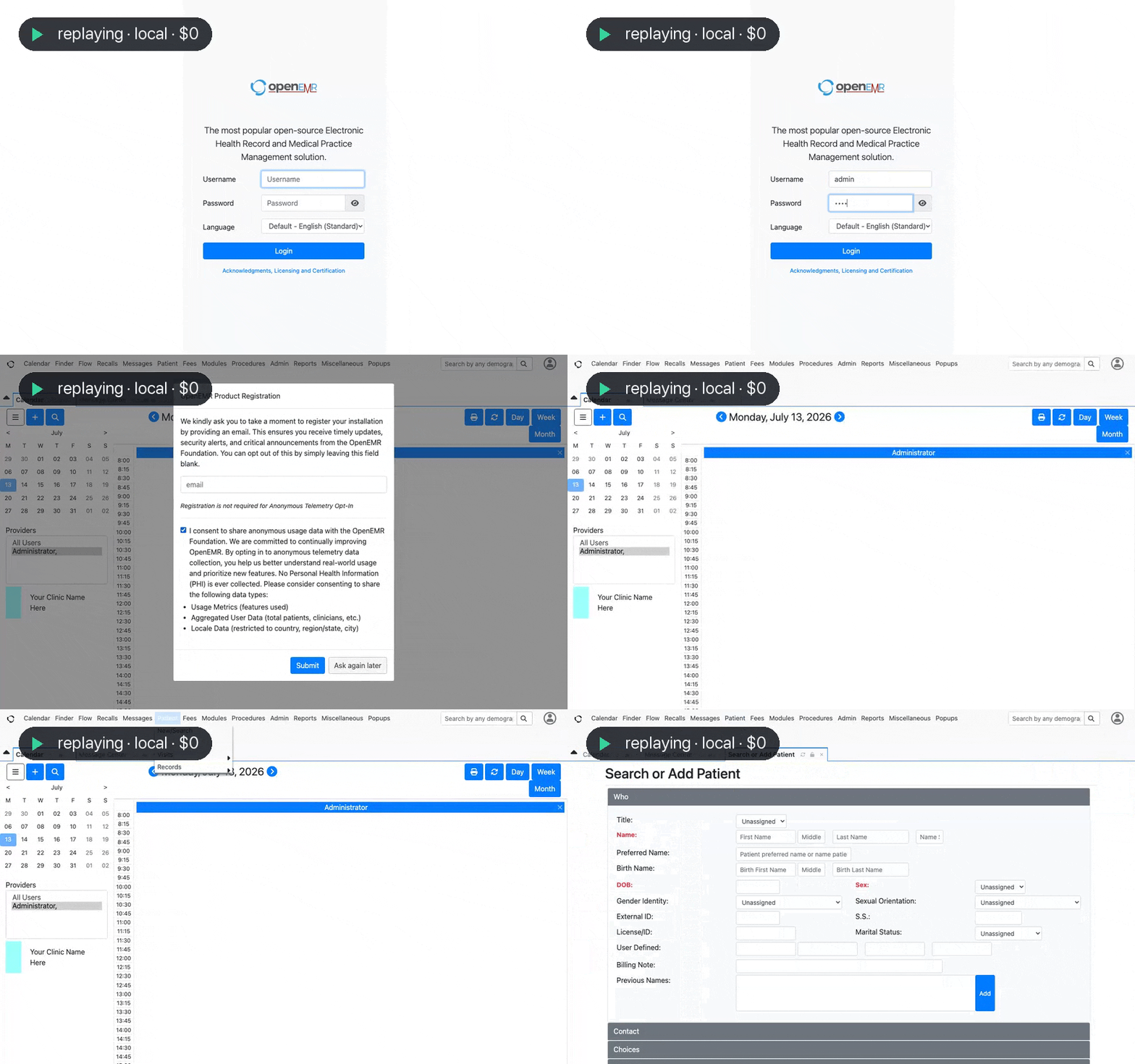
Run — real footage · driving a live OpenEMR instanceBrowser execution · selected application footage - 4.0
Resolve or halt
Under drift, deterministic evidence re-finds the target, an optional model proposes a repair, or verification refuses to continue.
target evidenceunique match required- 01Recorded OpenEMR target evidence
- 02Configured identity and target constraints
- 03Unique actionable match required
ambiguous or unverifiableHALT · REVIEWresolve or halt — OpenEMR replaySelected-app replay footage with the target-evidence ladder and explicit halt path animated in context.Browser execution · selected application footage - 5.0
Verify and report
Configured postconditions and effects are checked, and every run records what happened, changed, or halted.
run auditqualification required- Recorded mediarecord and compiled-replay footage
- Effect oraclenot established by this media
- Identity policymust be configured for the workflow
- Acceptancehalt until declared checks pass
No application-specific audit result claimedaudit — OpenEMR replayQualification contract for the OpenEMR reference. The footage does not establish an independent effect audit or production EMR reliability.Browser execution · selected application footage
Choose the right execution boundary
Original recordings stay local. If a managed or cross-boundary workflow is enabled, only a sanitized derivative that passes destination policy may upload; policy can require a local reviewer to approve its exact hash first. Live observations can contain PHI again, so they stay inside the declared managed, BYOC, or on-prem trusted runtime boundary. Approved public-web workflows use the managed path; workflows involving PHI, private systems, or desktop and remote substrates run inside a scoped customer-controlled deployment with the required written terms.
The wrong-patient defense
Require identity evidence before a consequential write.
Wrong-record writes are a critical automation risk. For a step configured with patient identity evidence, OpenAdapt halts when it cannot verify that the live record matches the demonstrated target. The public safety gallery shows the exact look-alike record cases behind this defense.
See the wrong-patient defense →Review the runtime safety model →
Where the execution layer fits
- Write approved output from an existing intake, RCM, or operations pipeline into the remaining browser-only form.
- Prefer supported APIs for reads and writes, then use governed GUI replay only where the target exposes no suitable integration path.
- Check the intended business effect independently, retain an illustrated run report, and halt on ambiguous identity or unverifiable outcome.
Put one last-mile workflow into production
Bring one repeated workflow, its application and version, monthly volume, common exceptions, and independent success oracle. We'll map the deployment boundary, shadow run, and supervised production rollout.
Evaluate a workflow